

 ENG
ENG
 Español
 عربى
عربى


Can the Right Masking Tape Reduce Rework in Precision Painting?
In precision painting, a clean finish often depends on what happens before the paint is applied. Poor edge sealing, tape lifting, uneven adhesion, or difficult removal can result in paint bleed, damaged surfaces, and additional rework. This is particularly important for automotive parts, machinery, appliances, and other products that require sharp color separation. Masking Tape therefore needs to do more than temporarily cover a surface. Its backing, adhesive, thickness, flexibility, and manufacturing consistency all influence how efficiently a masking operation can be completed.
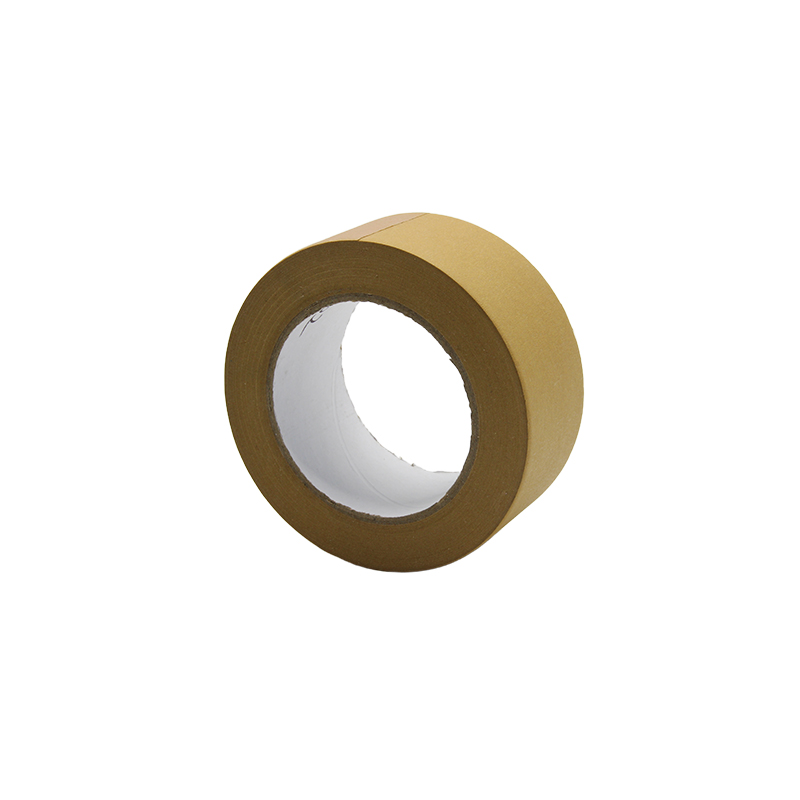
Paint Bleed Often Starts at the Tape Edge
Paint can migrate beneath the tape when the adhesive does not maintain sufficient contact with the substrate or when the tape cannot conform properly to the surface. Curves, recessed areas, textured materials, and small contours can make this problem more noticeable.
A precision masking tape should create a stable boundary between painted and protected areas. For demanding applications, manufacturers need to balance adhesion with conformability so that the tape follows the intended line without excessive stretching or lifting. Fine-line products are commonly developed specifically for sharp color separation and detailed paint work.
Backing Thickness Can Influence the Final Paint Edge
The backing is often overlooked when buyers compare masking products, yet its thickness and flexibility can affect the appearance of the finished paint line. A thicker tape may create a more noticeable transition at the masked edge, while a thinner and properly engineered backing can help produce a lower-profile paint edge.
For precision applications, manufacturers may evaluate:
- Backing thickness and dimensional stability
- Flexibility around curves and corners
- Resistance to tearing during removal
- Surface conformity during application
- Compatibility with the intended coating process
The right construction depends on the application rather than a simple preference for thicker or thinner tape.
Adhesive Consistency Matters During Production
Adhesive performance is central to reliable masking. The tape needs enough initial tack and holding power to remain in position during painting, while excessive adhesion can make removal difficult or increase the risk of transferring adhesive to the surface.
For a tape manufacturer, consistency across the roll and between production batches is just as important as laboratory performance. Adhesive formulation, coating weight, drying conditions, and coating uniformity all need to be controlled carefully.
This is especially relevant for distributors and OEM buyers who purchase masking tape in volume. A product that performs well on one sample roll but behaves differently in later batches can create production uncertainty and additional quality checks.
Fine-Line Masking Is Useful for Detailed Painting
Modern painting processes increasingly involve two-tone designs, narrow color separations, curved graphics, and detailed components. These applications place greater demands on tape placement and edge control than general-purpose masking.
Fine-line masking tapes are designed around these requirements, with manufacturers selecting backing materials and adhesives according to the required shape, surface, and coating conditions. Products for automotive painting, for example, may need to conform around complex surfaces while maintaining a clean separation between colors.
For buyers, this means a tape should be assessed according to the actual geometry and paint process rather than selected solely by width or price.
Removal Should Not Create a Second Problem
The masking process is not finished when the paint is applied. Removing the tape is another critical stage. If the backing tears, adhesive remains on the surface, or the tape pulls up fresh coating, workers may need additional cleaning or repair.
Removal performance depends on adhesive formulation, surface condition, exposure time, temperature, and the coating system. A tape manufacturer therefore needs to consider the complete application cycle when developing a product.
For industrial users, clean and predictable removal can help reduce unnecessary handling and make the transition from masking to finishing more efficient.
Manufacturing Precision Supports Application Consistency
The performance of masking tape is influenced not only by raw materials but also by how the product is manufactured and converted. Uneven adhesive coating, inconsistent roll winding, inaccurate slitting, or unstable tension can affect application and handling.
As a tape manufacturer, we control key stages including adhesive preparation, coating, drying, rewinding, slitting, and packaging. Production inspection can also be used to monitor dimensions, appearance, adhesion-related properties, and roll quality according to the product specification.
For OEM and private-label customers, these manufacturing capabilities provide greater flexibility when specific widths, roll lengths, core sizes, packaging formats, or adhesive characteristics are required.
Reduce Rework by Matching Tape to the Process
Reducing painting rework is not simply a matter of purchasing a stronger tape. The right product must match the surface, paint system, temperature, masking duration, geometry, and removal requirements. When these factors are considered together, manufacturers can develop a more suitable combination of backing and adhesive for the intended application.
For overseas buyers sourcing Masking Tape, working directly with a tape manufacturer can provide a more reliable route to consistent performance. By combining adhesive formulation, backing selection, coating control, precision slitting, and OEM customization, a manufacturer can help buyers obtain masking tape that supports clean paint lines, efficient removal, and more predictable production results.

Social Info
Products
- 2026 New Products
- Packing Tape
- Duct Tape
- Masking Tape
- Double-Sided Tape
- Stationery Tape
- Nano Tape
- Foam Tape
- Foam Patch
- Special Adhesive Tape
- Kraft Paper Tape
- Glue Stick
Contact Us
-
 +86-13957952299
-
 salesteam@fangzhentape.com
-
 21 Juxian Road, Shangxi Town, Yiwu City, Zhejiang Province, China
Mobile QR Code
Copyright © 2025 Zhejiang Yiwu City Fangzhen Plastic Co., LTD.
China Adhesive Tape

