

 ENG
ENG
 Español
 عربى
عربى


Can Sustainable Masking Tape Also Deliver Reliable Painting Performance?
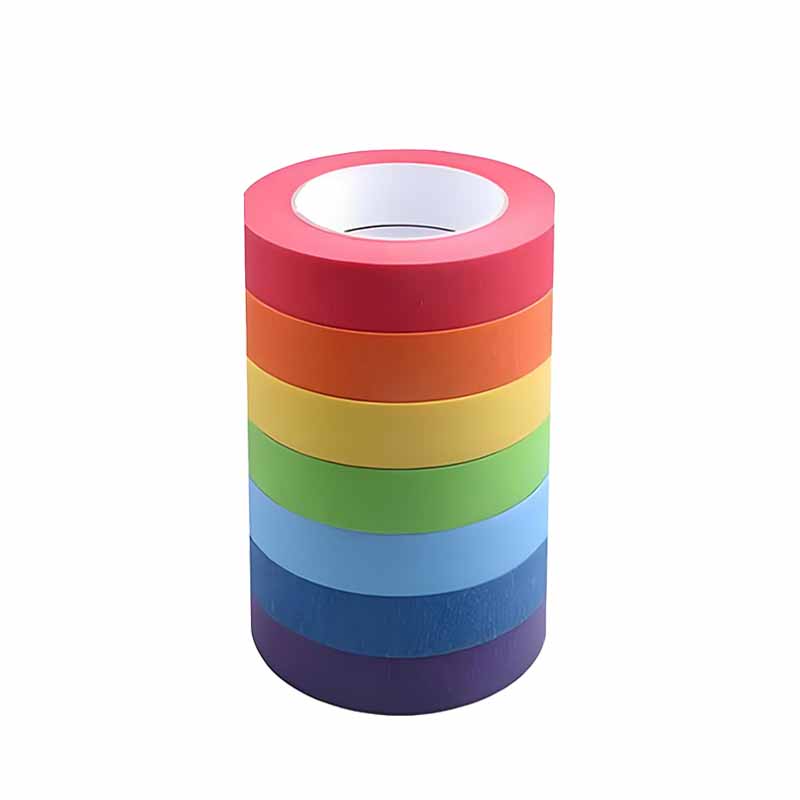
Sustainability is becoming a more practical consideration in industrial purchasing, but buyers still need masking materials that perform reliably on the production floor. For painting, refinishing, construction, and general industrial applications, a sustainable product must still provide suitable adhesion, conformability, clean removal, and process stability. Masking Tape manufacturers are therefore facing a more specific challenge: how to reduce material and production impacts without compromising the performance that professional users depend on.
Sustainability Starts With Material Selection
The environmental profile of a tape begins with its backing, adhesive, release treatment, and packaging. Paper-based backings can provide an alternative to conventional plastic materials in applications where their mechanical and moisture characteristics are suitable.
Responsible sourcing is also becoming part of material evaluation. Some tape manufacturers now offer paper backings from certified or controlled sources, while adhesive development is exploring solvent-free and water-based systems. These approaches show that sustainability can involve several parts of the product rather than relying on one material change alone.
Adhesive Performance Cannot Be Sacrificed
Choosing a more sustainable tape does not mean accepting weaker adhesion or poor masking results. The adhesive still needs to maintain sufficient contact with the substrate during application while allowing controlled removal afterward.
For industrial buyers, the most useful evaluation points include:
- Adhesion to the intended surface
- Holding power during the masking process
- Clean removal and residue control
- Compatibility with paints and coatings
- Temperature and moisture resistance
- Required masking duration
Different applications require different adhesive balances. A tape designed for short indoor painting may not be suitable for automotive refinishing or industrial coating processes. Manufacturers therefore need to match adhesive formulation with the actual working conditions.
Less Material Can Still Mean Better Performance
Sustainability is not always about replacing one material with another. Reducing unnecessary material use while maintaining required performance can also be valuable.
A carefully engineered backing can provide the necessary strength and flexibility without relying on excessive thickness. Recent developments in the adhesive tape sector have increasingly focused on optimizing material structures and using resources more efficiently rather than simply adding more material to increase performance.
For tape manufacturers, this requires close control over coating weight, backing properties, adhesive formulation, and converting accuracy.
Solvent-Free Adhesives Are Gaining Attention
Adhesive technology is another area where manufacturers can explore lower-impact production options. Solvent-free and water-based adhesive systems can reduce reliance on solvent-based processes, depending on the formulation and application.
However, the adhesive should still be evaluated for tack, holding power, coating consistency, and removal performance. A sustainable adhesive that creates paint defects or excessive waste during application may not deliver the expected overall benefit.
This is why product development should consider both environmental characteristics and practical performance from the beginning rather than treating them as separate objectives.
Waste Reduction Goes Beyond the Tape Roll
The environmental impact of masking operations is also connected with how efficiently the tape is used. Poor adhesion, tearing, premature lifting, or adhesive residue can result in discarded material and additional cleaning or repainting.
Manufacturers can support waste reduction by improving:
- Roll consistency and winding quality
- Slitting accuracy
- Adhesive coating uniformity
- Backing strength and conformability
- Packaging efficiency
- Product selection for specific applications
When the tape performs predictably, users can reduce unnecessary replacement and avoid some of the waste associated with failed masking operations.
OEM Buyers Need Clear Sustainability Information
For overseas distributors and industrial buyers, sustainability claims should be supported by meaningful technical information. Instead of relying only on general terms such as "eco-friendly," procurement teams can ask manufacturers about backing sources, adhesive technology, certifications where applicable, production processes, packaging materials, and disposal or recycling considerations.
This is particularly important for private-label and OEM projects. A manufacturer that controls adhesive preparation, coating, slitting, rewinding, and packaging can help customers develop a product specification that balances performance with their market's sustainability requirements.
Sustainable Design Should Still Solve the Application Problem
Sustainability is most useful when it works together with reliable industrial performance. A masking tape that reduces material impact but fails during painting can create additional waste through rework, surface cleaning, and replacement. The better approach is to consider the complete product lifecycle, from raw materials and manufacturing to application and removal.
As a Masking Tape manufacturer, we focus on balancing adhesive performance, backing selection, coating technology, converting precision, and packaging according to the intended application. For overseas buyers, this application-based approach provides a more practical way to evaluate sustainable tape options without sacrificing the masking performance required in professional production.


Social Info
Products
- 2026 New Products
- Packing Tape
- Duct Tape
- Masking Tape
- Double-Sided Tape
- Stationery Tape
- Nano Tape
- Foam Tape
- Foam Patch
- Special Adhesive Tape
- Kraft Paper Tape
- Glue Stick
Contact Us
-
 +86-13957952299
-
 salesteam@fangzhentape.com
-
 21 Juxian Road, Shangxi Town, Yiwu City, Zhejiang Province, China
Mobile QR Code
Copyright © 2025 Zhejiang Yiwu City Fangzhen Plastic Co., LTD.
China Adhesive Tape

