

 ENG
ENG
 Español
 عربى
عربى


What Is Changing in Industrial Sealing and Surface Protection Requirements Across Global Manufacturing?
Across global manufacturing, logistics, and assembly industries, the demand for reliable sealing and cushioning materials such as Packing Tape and Foam Tape is shifting rapidly. What was once a standardized consumable category has now become a performance-critical material segment influenced by automation, sustainability targets, and increasingly complex supply chains. Recent discussions among overseas procurement teams and engineering communities show a clear trend: buyers are no longer selecting tapes based solely on cost, but on application stability, environmental adaptability, and system compatibility.
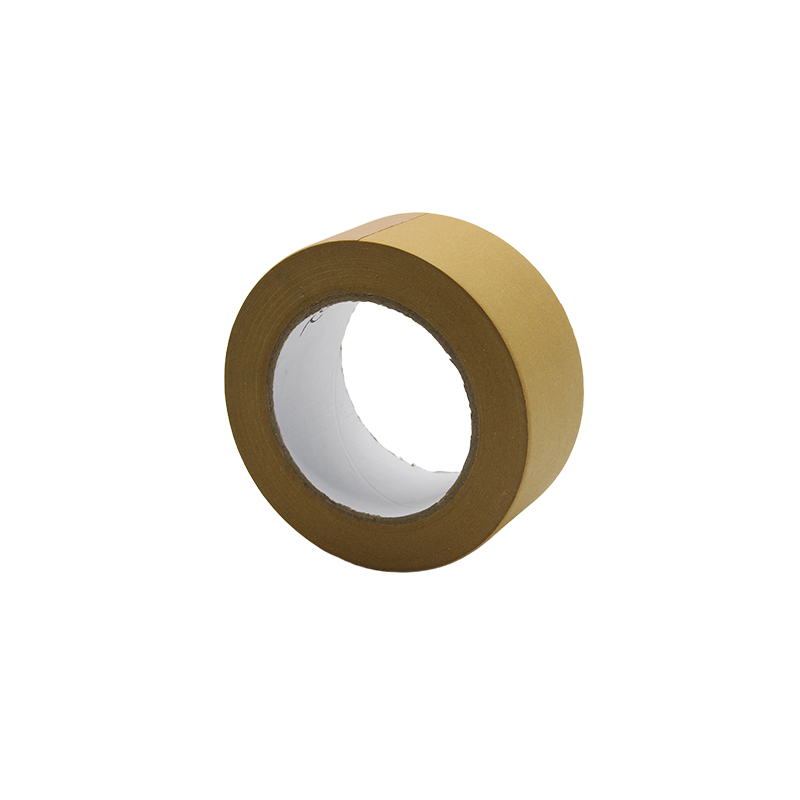
This transformation is especially visible in export-heavy industries where packaging integrity and component protection directly affect delivery performance and brand reputation.
Supply Chain Complexity Is Increasing Performance Expectations
Modern supply chains are more fragmented and time-sensitive than ever before. Products often pass through multiple handling stages, climate zones, and storage environments before reaching end users.
Key challenges include:
- Multi-point handling damage during transit
- Temperature fluctuations affecting adhesive stability
- Increased reliance on mixed-material packaging
- Higher expectations for zero-defect delivery rates
- Pressure to reduce packaging waste without sacrificing protection
These factors are pushing manufacturers to upgrade from conventional tape solutions to more engineered adhesive systems.
Standard Adhesive Products Are Struggling in Real-World Conditions
Traditional sealing tapes and basic foam materials were originally designed for controlled environments. However, real-world logistics conditions are far more demanding, exposing weaknesses in older formulations.
Common issues observed in industrial use include:
- Reduced adhesion on recycled and coated cartons
- Edge lifting during long-distance transport
- Poor performance in humid or cold storage conditions
- Inconsistent bonding strength across production batches
- Limited resistance to vibration and impact stress
These limitations often result in packaging failure, product damage, or increased return rates.
Automation Is Redefining Material Compatibility Requirements
With the expansion of automated packaging lines and smart warehouses, adhesive materials must now perform consistently under machine-driven conditions. This has significantly raised technical requirements for both packaging and industrial foam applications.
Modern expectations include:
- Stable unwinding performance for high-speed tape dispensers
- Uniform adhesive thickness for consistent machine application
- Reduced downtime caused by tape breakage or misalignment
- Compatibility with robotic and semi-automated systems
- Predictable performance under continuous operation cycles
These requirements are now central to procurement decisions in large-scale facilities.
Foam Adhesive Solutions Are Expanding Into Structural Applications
Beyond packaging, foam-based adhesive materials are increasingly used in structural assembly and surface protection applications. Their ability to absorb impact and compensate for uneven surfaces makes them valuable across multiple industries.
Key functional benefits include:
- Shock absorption during transport and assembly
- Vibration damping in mechanical and electronic systems
- Gap-filling capability for irregular surfaces
- Long-term bonding stability under thermal stress
- Surface protection against abrasion and friction
This versatility is driving wider adoption in automotive, construction, and electronics manufacturing.
Manufacturing Precision Is Now a Competitive Differentiator
In global sourcing decisions, manufacturing consistency has become just as important as product specification. Variations in adhesive coating or foam density can significantly affect performance in high-precision environments.
Reliable production systems ensure:
- Controlled adhesive formulation and blending
- Accurate coating thickness management
- Stable foam density and compression performance
- Multi-stage quality inspection processes
- Flexible OEM/ODM customization for different industries
These capabilities help ensure stable performance across diverse application scenarios.
Procurement Decisions Are Becoming More Engineering-Driven
International buyers are increasingly involving engineering teams in adhesive selection processes. Instead of choosing general-purpose materials, companies now evaluate products based on technical performance and application fit.
Key evaluation factors include:
- Adhesion strength across different substrates
- Environmental resistance (humidity, heat, cold)
- Compatibility with automation systems
- Mechanical durability under vibration and load
- Supplier engineering support and responsiveness
This reflects a broader shift toward technical procurement strategies in industrial sourcing.
Future Adhesive Systems Will Focus on Efficiency and Sustainability
The next stage of development in adhesive materials is being shaped by sustainability goals and manufacturing efficiency demands. Global industries are seeking solutions that reduce waste while improving performance consistency.
Emerging trends include:
- Recyclable and low-impact adhesive formulations
- Multi-functional tape systems combining sealing and protection
- Enhanced durability for long-distance logistics networks
- Improved compatibility with high-speed automation lines
- Application-specific customization for different industries
As these trends continue, advanced Packing Tape and engineered Foam Tape solutions will play a central role in supporting safer logistics, more efficient production systems, and higher-performance industrial applications worldwide.


Social Info
Products
- 2026 New Products
- Packing Tape
- Duct Tape
- Masking Tape
- Double-Sided Tape
- Stationery Tape
- Nano Tape
- Foam Tape
- Foam Patch
- Special Adhesive Tape
- Kraft Paper Tape
- Glue Stick
Contact Us
-
 +86-13957952299
-
 salesteam@fangzhentape.com
-
 21 Juxian Road, Shangxi Town, Yiwu City, Zhejiang Province, China
Mobile QR Code
Copyright © 2025 Zhejiang Yiwu City Fangzhen Plastic Co., LTD.
China Adhesive Tape

